
Holding the Line
On the yahrzeit of Rav Shagar zt”l

Dear Friends,
This past work I had the honor of speaking with Dr. Tomer Persico as part of my Jerusalem Book Launch. It was described by those there as a powerful and compelling conversation. A difficult one, in some ways, but necessary nonetheless. A recording of it can be found here.
This week’s essay is in honor of the yahrehtzeit of Rav Shagar, a rabbi and thinker who has had a profound effect on my life. In it, I try to reflect on exactly what that means.
Kol tuv,
Rabbi Zachary Truboff
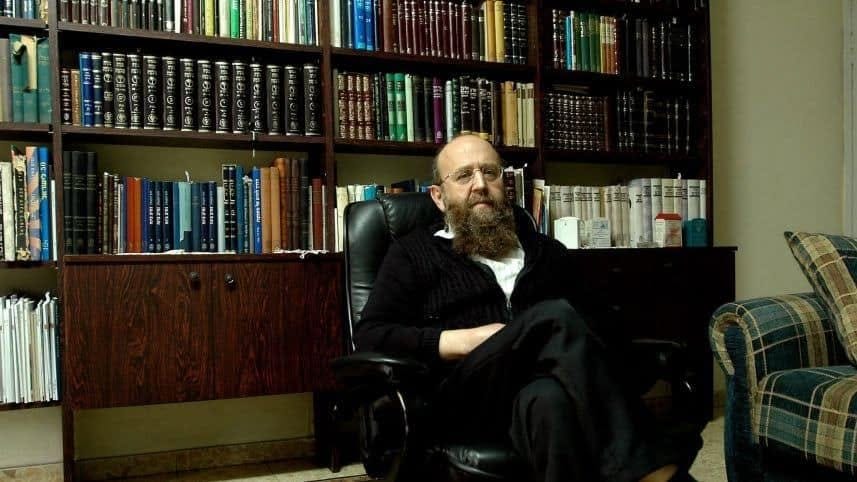
The Line He Held
Exactly fifty years to the day before October 7, Rav Shagar was a young soldier on the Golan Heights in the Yom Kippur War. His tank was hit. Two of his closest friends in the tank, Shaiya and Shmuel, were killed. He was badly burned but lived, yet carried the burns, and the loss, for the rest of his life. He describes that:
“After the war people came to me and said I needed to make a seudat hoda’ah. I said then that I could not. Not, God forbid, because I deny the kindness, but: ‘How can we sing God’s song?’ I cannot. Should I make a seudat hoda’ah while my friends did not merit to?”
Rav Shagar was not refusing the seudat hoda’ah because he didn’t believe in God’s kindness. Nor was he denying the miraculous nature of his survival. He was, instead, refusing because of his friends. How could he sit at a table of thanksgiving while Shaiya and Shmuel were not there?
He reached for a verse from Psalm 137 — the psalm of the Jews by the rivers of Babylon, who had been exiled and asked to sing the songs of Zion. They too refused despite having been saved from destruction: “How can we sing God’s song on foreign soil?” For Rav Shagar, life after the war became a foreign soil of sorts. He would not sing on it. Not while his friends could not.
What I find so powerful about this is that Rav Shagar refused the easy way out, and he would continue to do so for the rest of his life. He could have made the meal. People would have praised him for his faith. He would have fully rejoined the Religious Zionist community after the war rather than always feeling slightly outside of it.
But he refused so as to stay on the side of his friends, who had not been saved. He bore them. He did not let his survival become a story that left them behind.
Almost no one does this. The pull toward the comfortable position is enormous. In religious life, it is the pull to say that those who died died for a purpose, that everything happens for a reason, that we are the ones God spared. In political life, it is the pull to fold every loss into a story of national righteousness; to convert grief into vindication, the dead into proof that we were right. Both moves let the survivors stand on solid ground. Both leave the dead behind.
Rav Shagar refused, again and again, to stand on that ground. He held the line of his friends for the rest of his life, and out of that holding came the Torah he taught — Torah for people who needed to keep believing without pretending the questions had been answered, who needed to stay inside the broken pieces without rushing to put them back together.
After October 7, I find myself thinking about this constantly. The pressure to make sense of what happened — to fit it into a story that comforts us, that vindicates us, that lets us move on — is everywhere. Rav Shagar’s refusal is a reminder that there is another way to live with what we have lost. You can refuse the comforting story. You can stay with the dead. You can keep believing without lying about what faith now requires of you. Everything I have learned to think and write since first encountering his Torah rests on the line he held.
Some find the line too hard. Rav Shagar’s loyalty to what has been lost is experienced by them as risking the erasure of all meaning. To stare death in the eye is to risk being swallowed up by it. Therefore, they claim, we must leave the dead behind and quickly turn to find meaning in life.
What these people miss is something foundational about what it means to be a Jew, because as Jews, we live in a community of both the living and the dead. Carrying the dead does not compete with our responsibility to life — it is its most basic condition. The Yerushalmi says it better than I can:
“Two arks traveled with Israel in the wilderness — the ark of the Life of Worlds, and the coffin of Joseph. And the nations of the world would ask: what is the nature of these two arks? Is it possible that the coffin of the dead should travel beside the ark of the Eternal? And Israel would answer: the one who lies in this one fulfilled what is written in that one.”
Sit for a moment with what it is claiming. Israel could have abandoned Joseph when leaving Egypt, so as to march unburdened from the pain. Instead, they carried him out, just as Rav Shagar did for Shmuel and Shaiya. They carried him for forty years, through the wilderness, in the middle of the camp, beside the Ark itself.
The dead were not behind or beneath them but walked with them. Joseph’s presence next to the Torah did not contradict it. It was the proof of the covenant that made it possible, for a covenant is always a promise between the living and the dead. Joseph saved his family from famine and made his descendants swear to bury him in the promised land. Joseph ensured the covenant’s survival, and by bringing him with them, his descendants were finally able to fulfill it.
This is the answer to the fear many feel. What swallows a person is not the loss he carries. It is the loss he refuses to carry — because the losses we refuse to carry do not disappear. They follow you, paralyzing and suffocating you wherever you go. Rav Shagar was not swallowed by the loss. He carried it for thirty-four years, from the Golan to his last shiur, the coffin beside the Ark — and the Torah he has left us is a reflection of this.
It is a Torah that holds the line, a line that has become the foundation of my own Torah. And perhaps the deepest lesson he taught me is that being a Jew means it is all of ours to hold.
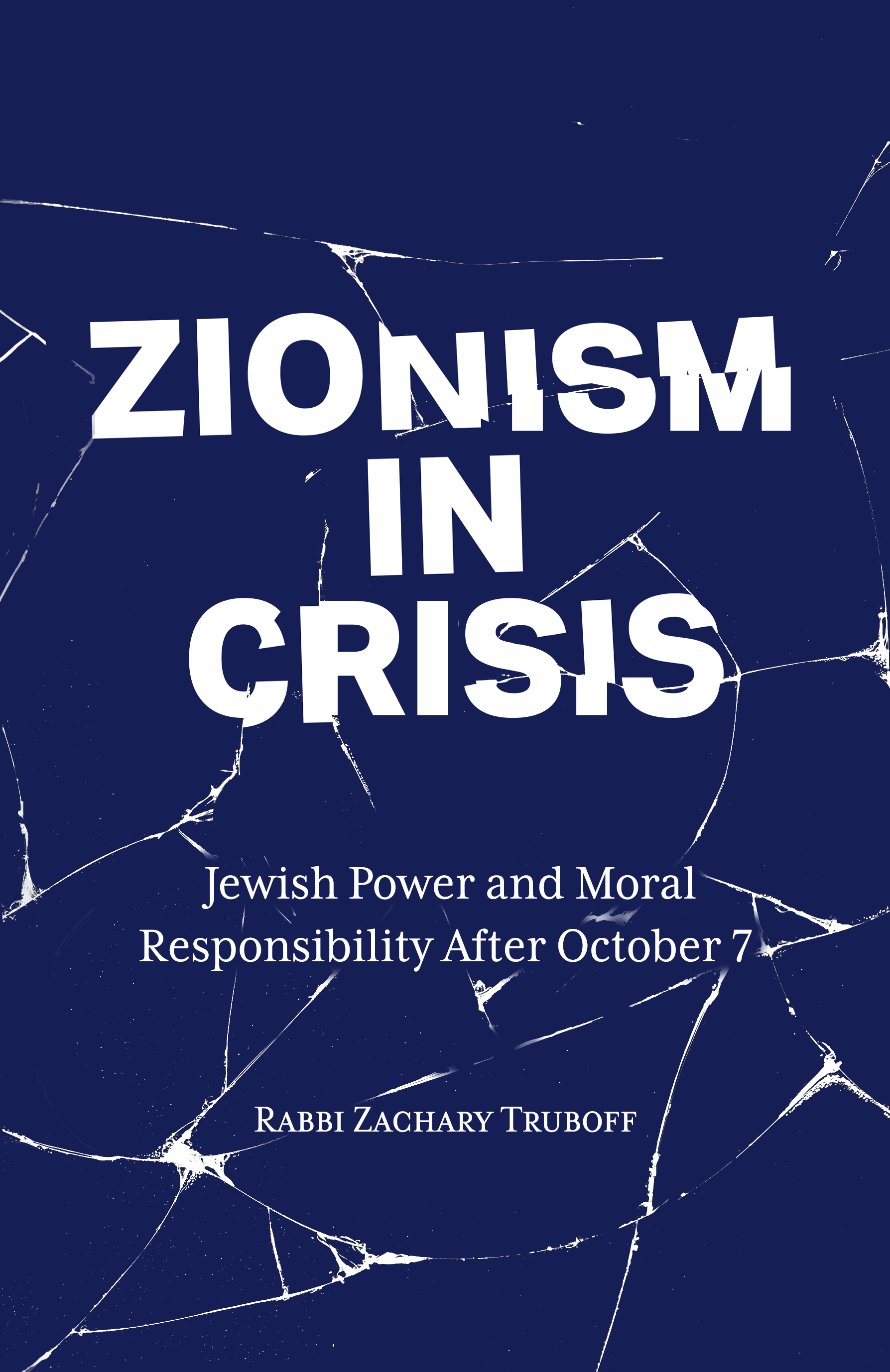
In the aftermath of October 7 and the war that followed, Zionism faces a moment of rupture. The trauma of the attacks, the brutality of the war, and the reemergence of antisemitism have made sustained moral and political reflection increasingly difficult. Even under these conditions, the failure to reckon honestly with Jewish power now threatens Zionism from within.
Drawing on Jewish theology, Zionist history, and contemporary political thought, Zionism in Crisis brings together essays that challenge sweeping defenses of Israel’s actions and total condemnations of Zionism. At its core, it is a call for teshuvah — a call to question whether the path we are on is the right one, to name what has gone wrong, and to change course before it is too late.
You can order the book here:
If you know someone for whom this book might be appropriate — someone willing to wrestle honestly with what Zionism has become and what it must yet become — I’d be grateful if you’d share this with them.