
Politics Without Guarantees
Return of the Jewish Problem, Part 3

Friends,
This is the third and final essay in my series, The Return of the Jewish Problem.
In Part 1, I argued that the postwar American consensus that let Jews feel effortlessly at home can no longer be taken for granted. The fusion of Jewish life, Zionism, and American democratic belonging is fraying, and Jews are being pushed back into an older condition, one in which the Jewish problem has returned.
In Part 2, I turned to college campuses and argued that Jewish institutions must resist reactionary temptations and instead cultivate the capacity for adult responsibility. Now, as this series concludes, the situation continues to unfold.
This final essay raises the question of who and what American Jews will become in a world where protection can no longer be assumed. To think through that question, I turn to the book of Esther, not as a story of salvation, but as a template for politics without guarantees and the recognition that responsibility always begins where guarantees end.
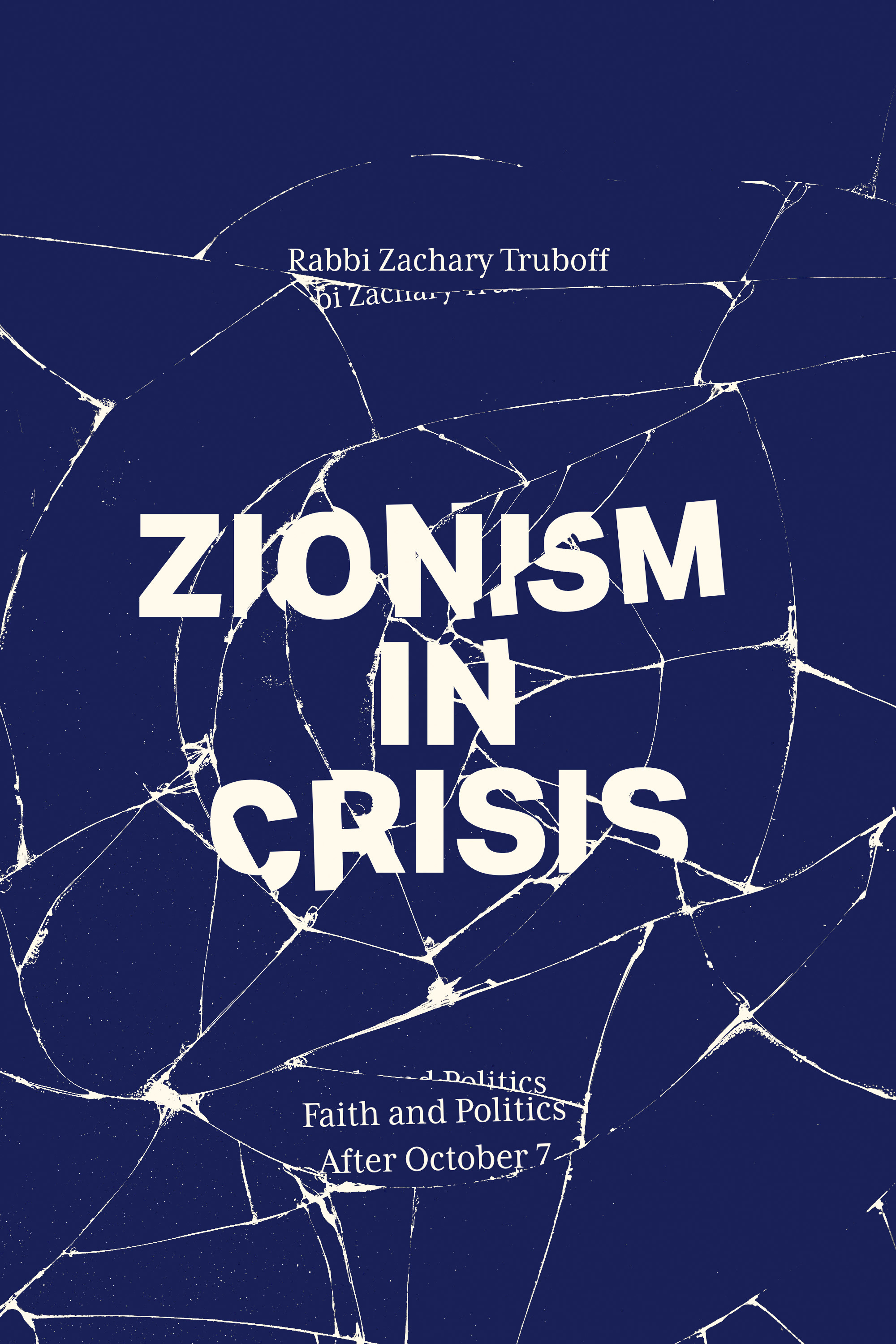
I am also excited to announce that my new book, Zionism In Crisis: Faith and Politics After October 7, will be out in a few weeks. Stay posted!
Kol tuv,
Rabbi Zach Truboff
Politics Without Guarantees
This past Thursday night, protesters gathered outside Young Israel of Kew Garden Hills in Queens, where an Israeli real estate event was taking place. They chanted “Say it loud, say it clear, we support Hamas here,” alongside “Death to the IDF” and “Globalize the intifada.” A daycare and two elementary schools closed early. Families were told to avoid the area.
What happened next surprised many. Governor Kathy Hochul condemned the protest immediately, calling the rhetoric “disgusting” and “dangerous.” Alexandria Ocasio-Cortez labeled it antisemitic. Even Zohran Mamdani, who only weeks earlier had equivocated about protests outside synagogues, declared that support for Hamas “has no place in our city.” Counter-protesters arrived. The NYPD maintained order. The system, it seemed, held.
This is good news, and it should not be dismissed. It suggests that the collapse of the liberal consensus has certainly not yet translated into the abandonment of Jews by American political institutions. There are still limits and still politicians willing to say that openly supporting Hamas while marching through a Jewish neighborhood is unacceptable.
But here is where things get harder. If the question were simply whether American institutions would protect Jews from the most explicit forms of antisemitic intimidation, we might allow ourselves cautious optimism. The question, however, is not only whether Jews will be protected. It is who Jews will become in a world where protection can no longer be assumed, and where even when it arrives, it arrives unevenly, belatedly, and with conditions. In this final essay, I want to turn to the deepest challenge: what it means for American Jews to take political responsibility for themselves as Jews, in a world that increasingly resembles Shushan.
To understand this moment, American Jews need to recover an older political vocabulary—one that does not begin with safety and security, but with responsibility. That vocabulary is preserved, with surprising clarity, in the book of Esther.
The Renewal of America’s Covenant
Many will argue that the proper response to rising antisemitism is for American Jews to double down on Zionism. And while Zionism remains central to American Jewish identity, it cannot substitute for Jewish political responsibility in America. Israel can sustain Jewish collective meaning, but it cannot absolve Jews of responsibility for the political order in which they actually live. Israel was never meant to relieve Jews of political responsibility in the countries where they lived. And America was never meant to be a place where Jews could enjoy protection without participation.
Those who argue that American Jews must double down on Zionism are essentially advocating retreat, treating the fate of American democracy as someone else’s problem. In doing this, they repeat one of the oldest Jewish temptations: the desire to abandon the responsibilities of the covenant and return to Egypt.
We must not forget what America offered Jews. For the first time in their history, Jews could live covenantally within a non-Jewish political community, not as tolerated guests, but as participants in sustaining a shared political world. America’s Constitution, like the Torah, rested on the fundamental principle that power must be restrained by law, for without this, those in charge soon act as if they were gods. But there is a second dimension to covenantal politics that is just as essential: responsibility. A covenant does not perpetuate itself automatically but only endures if those bound by it take responsibility for it again and again. At Sinai, all Jews were made responsible for the covenant with God, and in America, all citizens are responsible for the republic. Neither system functions if its members treat it as someone else’s problem.
When covenants begin to fray, the temptation is always the same: to flee responsibility. If we are responsible, we are implicated in the covenant’s failure; if not, we can just blame someone else. We see this pattern throughout the Torah, as the Jews perpetually run from the weight of what they accepted at Sinai. And we see it now in America, as citizens retreat into factions, pursuing only their own needs, each blaming the other for what has gone wrong.
Though covenants fray, they can be renewed, as the rabbis understood when they reflected on the book of Esther. At Sinai, they taught, the Jewish people accepted the covenant under duress; God held the mountain over their heads. The covenant was binding, but its consent was compromised. It was only later, in the days of Esther—when God was absent, when no miracles appeared, and when no redemption was promised—that the Jews freely renewed their covenant, taking responsibility for one another and their collective destiny.
American Jews now face their own moment of crisis, one similar to the Jews of Shushan. Though the American covenant is not the same as the covenant at Sinai, the question is the same: Will those who inherited it take responsibility for sustaining it, or will they flee that responsibility and blame others for its decay?
Responsibility Without Assurance
What does it mean to renew a covenant? It means acting without the guarantees the original covenant provided.
At Sinai, the terms of the covenant were spoken aloud, and God’s authority was unmistakable, but in Shushan, neither is true. God’s name never appears in the Book of Esther. No prophet speaks. And no revealed miracle intervenes. If the covenant is to survive, it will be because Jews choose to act, not because they are commanded to.
American Jews now find themselves in an analogous position. The liberal consensus that once structured American life can no longer be assumed, and if America’s covenant is to survive, it will be because citizens choose to fight for it. And here is what is essential to understand: Jewish safety and America’s covenant are bound together. The political order that protects Jews is the same order that restrains power, upholds rights, and prevents factionalism from becoming domination. To abandon it is a failure of Jewish self-interest rightly understood.
Yet, this is precisely where paralysis sets in. When a political system functions, action feels relatively safe. The rules are known, the risks contained, and the outcomes at least partly predictable. When those structures begin to fail, action no longer comes with assurances. Alliances may collapse. Speech may provoke backlash. Intervention may make things worse rather than better. And so we hesitate, waiting for the ground to stop shaking under our feet before we move.
Covenants do not repair themselves, and it is precisely when action feels most risky that it is most needed. This is why the book of Esther matters now. Esther faced a world without guarantees—a capricious king, a deadly decree, no divine assurance of success—and acted anyway. She models what it means to engage politically when the system offers no promises. Following in her footsteps, however, requires understanding the temptations that prevent political action. These are not merely personal failings. They are the ways we flee from responsibility, for America, and for ourselves.
The Temptation of Distance
When Mordechai first confronts Esther about the danger facing the Jews, her response is not one of courage. It assumes that because she is distant from the problem, she is safe. She is assimilated. No one knows she is a Jew. And she has every reason to believe that even if her identity were to be revealed, her position as queen would protect her. Mordechai, however, corrects her: “Do not imagine that you, of all the Jews, will escape with your life by being in the king’s palace.”[1] This is not a moral appeal but a political diagnosis. At the moment, problems may seem far away, but they will always find their way closer, and silence does not buy safety. A covenant cannot be renewed by those who believe they can opt out of its fate.
The American parallel is this: Jews who treat America’s democratic crisis as someone else’s problem. Jews who assume their institutional positions, their professional success, and their ideological alignment will insulate them from what is coming. Jews who say, “This is about Trump, or campus radicals, or the rich, but not about us.” But there is no opting out for one simple reason. If America’s covenant fails, there is no palace in which Jews will be safe. Failing to take up the political work of covenantal renewal is not neutrality. It is the abandonment of America, and ultimately of ourselves.
The Temptation of Innocence
Esther does not enter politics cleanly. She must manipulate and strategize, stage banquets, and seduce. She must use her position and even her desirability as political instruments, even going so far as to form an alliance with someone she surely finds detestable, a king complicit in her people’s death sentence. From this, we are reminded that politics requires acting in ways that risk real criticism and misunderstanding, because covenants are not renewed by those who can claim moral purity.
The American temptation is to substitute moral clarity for political action. Writing statements “against hate,” signing letters, attending protests, and declaring ourselves on the right side of history. These gestures allow us to feel virtuous while avoiding the risks and compromises that real politics demands. We hesitate to form coalitions with people whose views we find distasteful. We refuse to prioritize, because prioritizing means choosing, and choosing means being blamed for what we did not choose. But moral denunciation, however satisfying, cannot substitute for the difficult and painful work of politics. Esther understood that political action requires compromise, strategy, and risk. The American covenant will not be saved by those who insist on keeping their hands clean.
The Temptation of Waiting
When Mordechai tells Esther of Haman’s decree, her first instinct is to wait. She hesitates, citing the risk: anyone who approaches the king unsummoned may be put to death, and she has “not been summoned to visit the king for the last thirty days.”[2] Perhaps there is another way. Perhaps the moment is not right. Perhaps someone better positioned will intervene. Mordechai, of course, refuses to let her wait, but he cannot promise success either. He cannot guarantee her safety. He simply makes clear that waiting is not neutrality. It is a choice, and it has consequences.
When Esther does choose to act, she utters her famous words of sober vulnerability: “If I perish, I perish.”[3] She finally acts not because the risk has diminished, but because she finally understands that waiting will not make it go away. The American version of this temptation is everywhere. Waiting for the next election to fix things. Waiting for institutions to correct themselves. Waiting for the fever to break, for norms to reassert themselves, for someone else to take the risk. But America’s covenant is not self-correcting. It is not a machine that runs on its own. It is a political achievement that must be actively sustained, and it is decaying while we wait.
Who Will We Become?
This series began outside Park East Synagogue, moved through the crisis unfolding on college campuses, and ends in Shushan because the political situation of American Jews now resembles, in crucial ways, the world Esther faced: a world where protection is uncertain, power is opaque, and no one can be counted on to intervene in time.
This is what the book of Esther teaches. Not that salvation is guaranteed, but that responsibility begins where guarantees end. American Jews can’t be certain the political order will protect them, but its renewal is still worth fighting for. Jewish survival and American renewal are not separate projects. They are the same one, seen from different angles. The question facing American Jews is no longer whether antisemitism is real. It is. It’s not whether the liberal consensus has cracked. It has. The question is: who will we become now that we know this?
Will we retreat into distance, persuading ourselves that America’s crisis belongs to someone else? Will we cling to innocence, substituting moral declarations for political action? Will we keep waiting—for the next election, the next administration, the next moment when risk feels lower—while the covenant continues to decay? Or will American Jews do what Esther did: act anyway, without guarantees, bearing responsibility for a political world that will not sustain itself without us?
The Jewish problem has returned. But so has the Jewish question, the one Jews have always been forced to answer in moments of danger and transition: whether we will take responsibility for the world we inhabit, or leave others to decide our fate.
American Jews did not choose this moment. But they cannot escape it. The covenant is now in their hands, both covenants, Jewish and American, bound together more tightly than we once believed.
As Esther said, “If I perish, I perish.” But until then, the work is clear.
[1] Esther 4:13.
[2] Esther 4:11.
[3] Esther 4:16.